
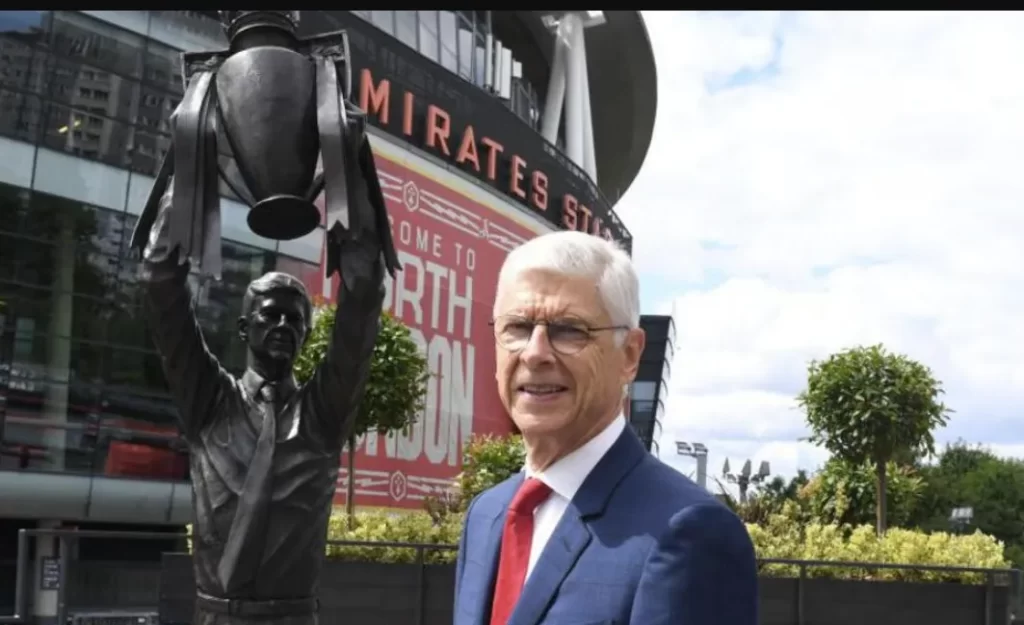
In a move that has stirred deep emotions among fans and pundits alike, Arsenal Football Club has officially unveiled a statue of its most iconic manager, Arsène Wenger, outside the Emirates Stadium. This majestic tribute, placed at the very heart of the club’s modern home, is not merely a piece of art but a powerful symbol of an era that transformed English football. For fans seeking to explore this story further, platforms like Six6s have been buzzing with discussions about this historic moment, blending the past with the present in a celebration of sporting greatness.
The statue, which captures Wenger in his trademark thoughtful pose, overlooking the stadium he helped to build, serves as a permanent reminder of his unparalleled contributions. It marks a poignant full circle for the Frenchman, whose revolutionary philosophies reshaped Arsenal from a traditional British club into a global powerhouse. This article dives deep into the unveiling ceremony, the significance of the monument, and what it means for the future of the club, offering an expert analysis that goes beyond the headlines.
The Unveiling Ceremony and Public Reaction
The long-awaited ceremony took place under the grey skies of North London, but the atmosphere was anything but dull. Former players, club officials, and thousands of supporters gathered to witness history. The bronze statue, sculpted by a renowned artist, stands proudly alongside the existing tributes to Herbert Chapman and Tony Adams, solidifying Wenger’s place in the club’s pantheon of immortals.
Who Attended the Event?
The guest list read like a who’s who of the club’s golden era. Key figures included:
- Thierry Henry: Wenger’s star pupil and the club’s all-time leading scorer.
- Patrick Vieira: The formidable captain of the Invincibles.
- Dennis Bergkamp: The Dutch maestro whose signing heralded the Wenger revolution.
- Current management: Mikel Arteta and the coaching staff paid their respects, acknowledging the huge shadow Wenger still casts over the club.

Who Attended the Event?
The Emotional Impact on the Fans
For the Arsenal faithful, this was more than just a statue. It was validation. After years of division in the latter stages of Wenger’s reign, seeing the club fully embrace his legacy felt cathartic. Social media—and specialized sports hubs like Six6s—lit up with tributes, with many fans sharing personal memories of the Wenger years. It served as a healing balm, reminding everyone of the beautiful football that defined an era.
The Symbolism of the Statue’s Location
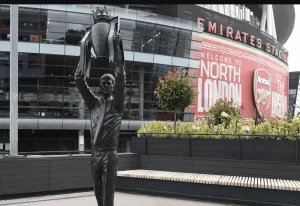
The placement of the statue is highly deliberate. Positioned directly outside the Emirates Stadium, it connects the past glories of Highbury with the club’s ambitious future. Wenger was the driving force behind the move from the old stadium, arguing that it was essential for the club to compete financially with Europe’s elite.
A Manager Who Built More Than a Team
Wenger’s vision went far beyond the pitch. He was the architect of the club’s entire modern infrastructure.
- Training Ground: He oversaw the development of the state-of-the-art training facility at London Colney.
- Diet and Fitness: He revolutionized dietary habits, banning junk food and introducing scientific training methods.
- Global Scouting: He broke down barriers by scouting talent from Africa, Asia, and South America, bringing a global flair to English football.
By placing the statue at the Emirates, the club acknowledges that Wenger didn’t just win trophies; he built the very platform that allows Arsenal to compete today.
Analyzing Wenger’s Tactical Legacy
To truly understand the statue’s significance, one must revisit the tactical revolution Wenger brought to the Premier League. His philosophy was simple but radical: football should be an art form.
The “Invincibles” Era
The 2003-2004 season remains the benchmark. Going an entire league season unbeaten is a feat that had not been achieved in the top flight for over a century. This team was a perfect blend of power, pace, and technical brilliance.
- The Back Four: Sol Campbell and Kolo Toure provided the steel.
- The Midfield: Vieira and Gilberto Silva offered the balance of destroyer and creator.
- The Front Four: Bergkamp, Henry, Pires, and Ljungberg played a fluid, interchanging style that defenses simply could not handle.
The Shift in English Football
Before Wenger, the Premier League was dominated by long-ball tactics and physicality. Wenger introduced a “continental” style:
- High defensive line: To compress the space.
- Quick passing triangles: To unlock stubborn defenses.
- Emphasis on technique: Over brute strength.
This influence is still visible today. Current managers like Pep Guardiola and Mikel Arteta owe a debt to the philosophy Wenger popularized in England. To keep up with these tactical evolutions and historical comparisons, many fans turn to dedicated sports analysis platforms that break down complex strategies into digestible insights.
Comparing the Statue to Other Tributes
This is one of the most significant statues ever dedicated to a manager in world football. How does it compare to others?
| Manager | Club | Location | Significance |
| Arsène Wenger | Arsenal | Emirates Stadium | Symbolizes a 22-year reign of transformative style and success. |
| Sir Alex Ferguson | Manchester United | Old Trafford | Represents unparalleled trophy haul and dominance. |
| Bill Shankly | Liverpool | Anfield | Embodies the working-class spirit and rebuilding of a giant. |
| Brian Clough | Nottingham Forest | City Ground | A tribute to achieving the impossible (winning the league and European Cup). |
While Ferguson’s statue celebrates raw power and winning, Wenger’s statue celebrates intelligence, elegance, and a romantic vision of the game. It is fitting that the “Professor” is immortalized in bronze, forever looking over his creation.
Conclusion: Arsenal Unveil Arsène Wenger Statue at the Emirates Stadium
The unveiling of the Arsenal Unveil Arsène Wenger Statue at the Emirates Stadium is a defining moment for the club. It closes a chapter of history while opening a new one, solidifying the Frenchman’s status as an immortal figure in football. This tribute is not just about the past; it is a statement of identity.
For current fans and future generations, this statue will serve as a daily reminder of what is possible when a club trusts in a philosophy and a man. It encourages us all to appreciate the beauty of the game, the grace under pressure, and the rewards of visionary leadership. Six6s
What are your memories of the Arsène Wenger era? Do you think this statue should have been built sooner? Share your thoughts in the comments below, and don’t forget to share this article with fellow football enthusiasts to keep the conversation going!
