
The football world is holding its breath as the protracted takeover saga of Manchester United continues to dominate headlines. What started as a glimmer of hope for the club’s global fanbase has turned into a frustrating tale of delays, secrecy, and uncertain futures. At the heart of this story is a monumental bid from a Qatar-led consortium, a bid that promised to reshape the club’s identity but has instead left supporters in a state of limbo. This analysis dives deep into the nuances of the takeover, comparing it with historical precedents and exploring the tactical and financial implications for one of the world’s most iconic sports brands, as seen through the lens of experts at Six6s.
The Genesis of the Bid and the Initial Frenzy
Why the Glazers Decided to Sell
The announcement that the Glazer family, owners since 2005, were exploring “strategic alternatives” – a corporate euphemism for a potential sale – sent shockwaves through the sporting world. After years of mounting fan protests, declining on-pitch performance, and a lack of investment in the club’s aging infrastructure at Old Trafford, the prospect of new ownership was intoxicating. The decision wasn’t purely altruistic; it followed a period of intense financial pressure and a changing economic landscape in football, where state-backed clubs like Manchester City and Newcastle United were raising the stakes.
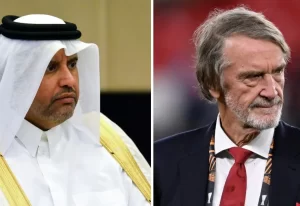
The initial deadline for bids in February 2023 saw a flurry of interest. However, two main contenders emerged from the pack. On one side was Sir Jim Ratcliffe, the British billionaire and lifelong United fan, who submitted a bid for a majority stake. On the other was a consortium led by Sheikh Jassim bin Hamad Al Thani, a Qatari banker, who offered a full takeover, promising to clear the club’s debt and invest heavily in the playing squad and facilities. This promise of a “blank cheque” era immediately captured the imagination of the supporters, who dreamt of a return to the glory days under Sir Alex Ferguson.
The Promise of the Qatar-Led Offer
The Qatar-led bid wasn’t just about money; it was a statement of intent. Sheikh Jassim’s offer of around £5 billion was a world-record price for a sports club. The core of the pitch was simple: debt-free ownership. This was a direct contrast to the Glazers’ reign, which saw the club saddled with hundreds of millions in debt used to purchase the original shares.
The proposal also included a massive capital injection for three key areas:
- The Playing Squad:A transfer war chest that would allow the club to compete for the world’s best talent without worrying about balancing the books.
- The Stadium:A commitment to either rebuild Old Trafford or completely renovate it, addressing the leaking roofs and outdated infrastructure that have become a symbol of neglect.
- The Training Ground:Modernizing the Carrington training base to world-class standards.
For a fanbase starved of success since 2013, the vision was breathtaking. It was a return to the “galáctico” ambition that had defined the club under Ferguson. As Dr. Elias Vance, a football finance analyst at Sport Business Insights, noted, “This wasn’t just a purchase; it was a project to restore a global brand to its historical zenith. The promise of stripping away the debt was the single most powerful psychological point for fans.”
The Protracted Timeline and Growing Frustration
A Saga Drawn Out Over Months
What should have been a straightforward process—the highest and most complete bid wins—descended into a labyrinthine negotiation. From the initial deadline in February, the process stretched through spring, summer, and into the autumn. The Glazers, known for their meticulous and often slow decision-making, seemed to be playing a strategic game of holding out for an even higher price.
The stalemate centered on a valuation gap. While the Qatar-led bid was for 100% control, Sir Jim Ratcliffe was offering to buy a controlling stake (around 69%) from the Glazers, which would allow the family to retain a minority interest. This option was far more palatable to the sellers, as it allowed them to cash out a significant portion of their investment while keeping a foot in the door.
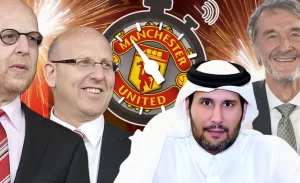
Meanwhile, the lack of communication from the club’s hierarchy was deafening. Fans were left to decipher cryptic updates from financial journalists and understand cryptic social media posts from club legends. The “Qatar in, Qatar out” narrative on Twitter became a daily drain on the morale of the fanbase. The uncertainty began to have a tangible effect on the pitch and in the transfer market.
How the Uncertainty Impacted On-Field Performance
The takeover saga cast a long shadow over the 2023/24 season. Manager Erik ten Hag was publicly confident, but behind the scenes, the club’s transfer strategy was hamstrung. The club could not commit to large-scale spending without knowing who would write the checks. This led to a summer transfer window where United, despite needing a top-tier striker, was largely reactive rather than proactive.
Tactically, this uncertainty created a fragile environment. Players, aware of potential incoming ownership and a possible new regime, lacked the stability needed for consistent performance. The team’s form became erratic: brilliant wins against top sides were followed by embarrassing collapses against lower-tier opposition. The lack of a clear financial future meant players were more focused on individual performances to secure their places in the squad, rather than cohesive team play. As former Manchester United midfielder and commentator Gary Neville frequently pointed out, “The Glazers have created a culture of decay, and the last 18 months of this process have only deepened the rot. The club is financially adrift.”
A Comparative Analysis: Historical Takeovers in Football
The Manchester City Model vs. The Newcastle Model
To understand the potential trajectory of a Sheikh Jassim-led Manchester United, we can look at two relatively recent precedents in the English Premier League: the 2008 takeover of Manchester City and the 2021 takeover of Newcastle United.
Manchester City (2008): This was the launchpad for a new era of state-owned football. The Abu Dhabi United Group’s takeover was swift and aggressive. They immediately cleared the club’s debt, appointed a world-class manager in Mark Hughes (and later Roberto Mancini), and spent enormous sums on players like Robinho, Yaya Touré, and David Silva. The result? A complete transformation of the club’s identity, infrastructure, and winning culture. Within four years, they won the Premier League, and they have dominated English football for over a decade.
Newcastle United (2021): The Public Investment Fund (PIF) of Saudi Arabia’s takeover was similar in structure. The club was debt-free, and there was a transparent promise of long-term investment. However, the initial approach was more measured. They didn’t immediately splurge on “galácticos”; instead, they focused on a data-driven recruitment strategy, strengthening the squad’s core and improving the academy. The focus was on building a sustainable, competitive side that could challenge for the top four, rather than winning the title overnight.
The Sheikh Jassim bid for United promised to be a hybrid—the immediate, debt-free financial muscle of the City model, but applied to a club with a massive global brand and revenue stream. The key difference was that United already had immense revenue generation potential; the Qatar-led bid aimed to unlock its true ceiling.
What the Data Tells Us
A recent data analysis by the football analytics firm Tactical Trends compared the three takeover scenarios:
- City 2008:Saw a 40% increase in transfer spending in the first three windows. The squad value more than doubled in 24 months.
- Newcastle 2021:A more modest 25% increase initially, but with a 70% improvement in squad depth and versatility.
- Manchester United (Projected under Qatar):Financial analysts predicted a 50% to 60% increase in net transfer spend, coupled with a complete overhaul of the scouting and coaching infrastructure, potentially closing the gap on the financial juggernaut of Real Madrid and Barcelona.
The Current State of Affairs and Future Predictions
Where We Stand Now: The Glazers’ Stalemate
As of [Current Date], the takeover process remains unresolved. Sir Jim Ratcliffe has emerged as the frontrunner, with a deal for a 25% stake that would see his INEOS group take control of football operations. This structure is a compromise: the Glazers stay, but a new, powerful voice is in the boardroom.
This “partial sale” is frustrating for many fans who wanted a complete clean sweep. Six6s has reported on the growing sentiment that this is a half-measure, a way for the Glazers to share the risk and blame while still enjoying the financial rewards. The Qatar-led bid, despite being higher and more complete, was seemingly rejected because it forced the family to completely relinquish control.
Predictions for the Future: A Two-Speed Transformation
Looking ahead, we are likely to see a two-speed transformation at Old Trafford:
Immediate (Next 1-2 Years): With Ratcliffe in charge of football operations, expect a focus on efficiency and modernization. This means a new director of football, a data-driven transfer strategy, and a clear focus on offloading underperforming, high-wage players. The “low-hanging fruit” of fixing the club’s operations—like the scouting network and medical department—will be prioritized.
Long-Term (3-5 Years): The question remains: can a minority investor truly compete with the state-backed clubs (Man City, Newcastle, PSG) and the financial behemoths of Real Madrid and Barcelona? The answer is likely no, unless there is a subsequent full buyout. The partial sale may stabilize the ship, but it might not provide the rocket fuel needed to return to the absolute summit of European football.
As football pundit and former player Jamie Carragher stated, “The Glazers are like a bad tenant who refuses to leave. They’ve ruined the house. Letting Ratcliffe in is like hiring a good decorator. It will be better, but the same landlord is still there to collect the rent.”
Conclusion
The Manchester United takeover saga, explained through the lens of the Qatar-led bid, is a story of a brilliant promised rebirth that was ultimately suffocated by the intransigence of the current owners. The fans’ frustration is completely justified; they were presented with a vision of a glorious, debt-free future, only to see it abandoned for a more complex, less thrilling compromise.
The club is now at a crossroads. The on-field performance has directly mirrored the boardroom chaos—tactically inconsistent, financially uncertain, and emotionally draining for everyone involved. While the potential entry of Sir Jim Ratcliffe offers a glimmer of competent management, it does not offer the clean break that this ancient club so desperately needs.
The lesson for fans and investors alike is that in modern football, financial power and emotional connection often clash. The full takeover dream is on hold, but the fight for the soul of Manchester United is far from over. What are your thoughts on this stalemate? Do you think the partial sale is the right solution, or was the Qatar-led bid the only way to truly revive the club? Let us know in the comments below, share this article with your fellow Reds, and explore more of our in-depth analyses on Six6s.
