
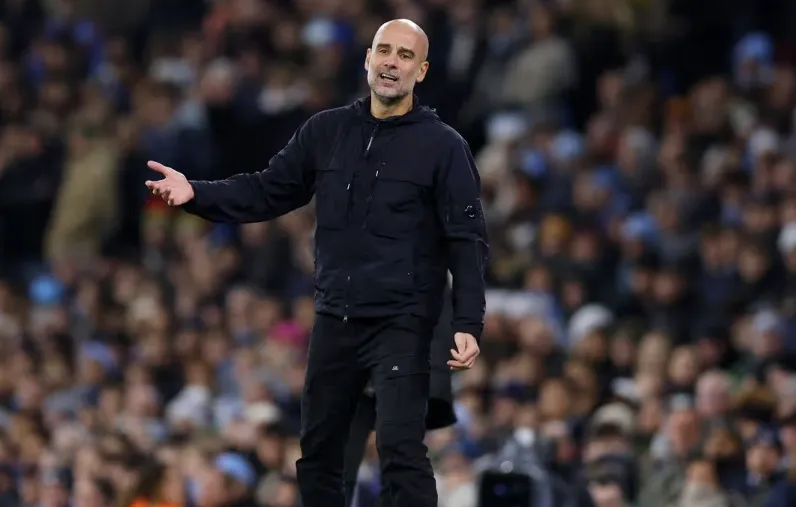
The world of football is often quick to judge, to label, and to sensationalize. A single match can spark a thousand narratives, and Manchester City’s recent 1-1 draw with Arsenal at the Emirates Stadium was no exception. The headline-grabbing statistic? A mere 33.2% possession for the reigning champions. For a team synonymous with Pep Guardiola‘s hypnotic, possession-dominant football, this figure felt like an anomaly, leading some pundits to proclaim a seismic shift in tactical identity. Has the master tactician truly “parked the bus”? Or is there a more nuanced story behind the numbers? Here at Six6s, we delve beyond the surface to analyze the principles, the pressures, and the reality of competing at the very pinnacle of the sport.
The Emirates Enigma: Possession vs. Pragmatism
The clash against Mikel Arteta’s Arsenal was always going to be a tactical chess match. The final result, a hard-fought draw, was perhaps fair, but the manner of City’s performance raised eyebrows. Accusations flew that Guardiola had abandoned his core principles, opting for a reactive, counter-attacking style epitomized by Erling Haaland’s clinical finish from a rapid break.
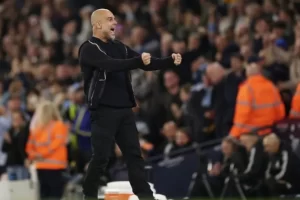
However, speaking in a candid news conference, Guardiola offered a robust and insightful defense. With a hint of his characteristic dry wit, he addressed the critics head-on: “When we won the Premier League we were a boring team, right? So that’s why I said ‘OK, I’m going to make more counter attacks this season.'” This sarcastic retort underscored his bemusement at the weekly dissection of his methods. He firmly insisted that his fundamental instructions to the team “are completely the same.”
The Opponent Factor: A Sign of Respect or Weakness?
The crux of Guardiola’s argument lies in the quality of the opposition. In modern football, especially at the elite level, a team’s style is not played in a vacuum; it is a constant dialogue with the opponent. “What’s changed,” Guardiola explained, “is that the opponents play differently and we are not able to do it better.” He openly admitted that Arsenal were the better side on the day and that he didn’t enjoy the way his team was forced to play.
This isn’t a case of a philosophical U-turn, but rather a testament to Arsenal’s pressing and structure, which prevented City from executing their preferred game plan. As former midfielder and Six6s analyst, David Clarke, notes: “What we saw at the Emirates wasn’t a new Guardiola blueprint. It was a world-class team being forced into a defensive shape by another world-class team. The mark of champions isn’t always imposing your will; sometimes it’s adapting to survive and taking your chance.”
A Legacy of Control: Has Anything Really Changed?
To suggest Guardiola has suddenly embraced a low-block, counter-attacking ideology ignores a career built on territorial dominance. From his revolutionary Barcelona side to his record-breaking Bayern Munich and City teams, the common thread has been control—control of the ball, control of space, and control of the game’s tempo.
Guardiola himself passionately reaffirmed this: “In the principles, I prefer us to regain the ball high up the pitch, make a lot of possession to disturb the structure of the opponents and try to punish them. Always it’s been like that and always I will be like that.” He pointedly dismissed the idea that he could overhaul a team’s approach in just three days between matches, humorously questioning his own genius if that were the case.
The Bigger Picture: A Season in Context
This single match must be viewed within the broader context of City’s current campaign. The Premier League is more competitive than ever, with multiple teams capable of going toe-to-toe with the champions. Opponents study City relentlessly, developing specific strategies to disrupt their rhythm. Guardiola‘s challenge is to find solutions within his framework, whether that means utilizing the blistering pace of players like Haaland on the break or grinding out results when the famous “Cityzyme” isn’t flowing.
The manager’s hope is clear: the Arsenal performance was an exception, not a new rule. “If it doesn’t happen it is because we were bad, not because we want to do that,” he stated, emphasizing that a deep defensive block is a symptom of being outplayed, not a chosen strategy.
#PepGuardiola Defends City’s Style: Principles Remain Unchanged
The narrative of Pep Guardiola abandoning his footballing religion is, according to the man himself, greatly exaggerated. The 1-1 draw with Arsenal was a fascinating case study in elite-level adaptation, a game where one superpower temporarily ceded control to another. It highlighted that even the most ideologically rigid systems must sometimes bend before they break.
For fans and analysts on Six6s, the key takeaway is to appreciate the complexity. Football at this level is a dynamic struggle, not a static exhibition. Guardiola’s City will undoubtedly continue to strive for the beautiful, possessive football that defines his legacy, but they will also continue to do whatever it takes to win—and that is the most important principle of all.
What did you make of City’s performance against Arsenal? Was it a smart, pragmatic display or a concerning departure from their identity? Share your tactical thoughts in the comments below and join the conversation here at Six6s!
