
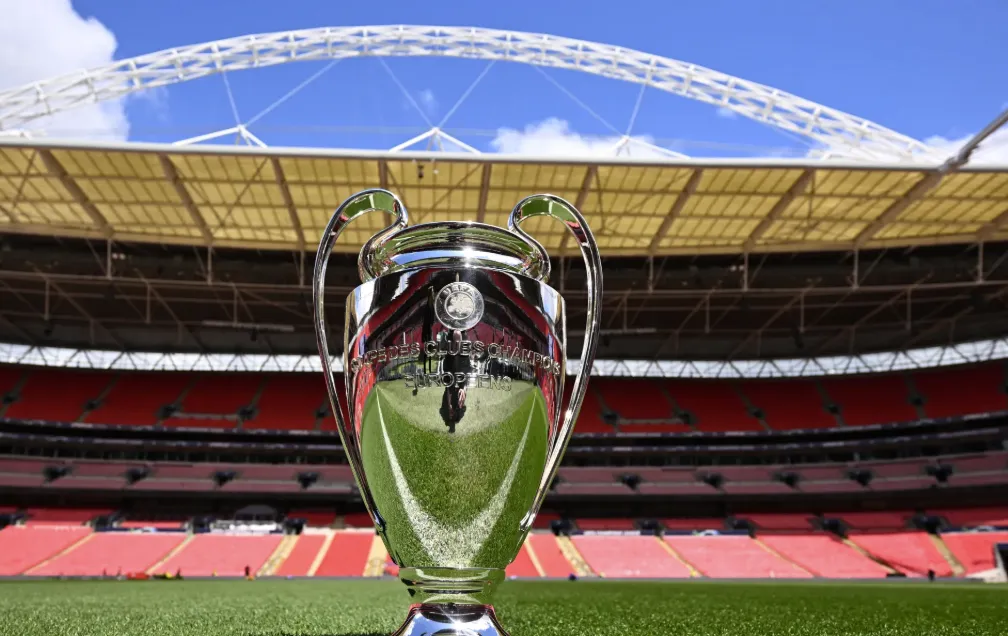
The footballing world is buzzing with anticipation as UEFA has unveiled its plans for the Champions League finals from 2028 to 2030, marking a significant milestone in the tournament’s history. In a move that blends tradition with modernity, the Allianz Arena in Munich will host the 2028 showpiece, Wembley Stadium will welcome the world for the 2029 final, and the iconic Camp Nou in Barcelona will take center stage in 2030. This announcement not only sets the stage for some of the most anticipated matches in club football but also signals a strategic shift in how Europe’s premier competition is presented to a global audience. As a sports commentator with years of experience analyzing football’s biggest moments, I can tell you this is more than just a schedule update—it’s a statement about the future of the beautiful game. Let’s dive deep into what these selections mean for clubs, fans, and the broader football ecosystem.
Why These Stadiums Were Chosen: A Blend of History and Modernity
When UEFA selects a host for the Champions League final, they aren’t just looking for a large stadium; they are looking for a venue that embodies the spirit of European football. Each of these selections carries a unique weight. The Allianz Arena in Munich is a cathedral of modern design, first opening its doors in 2005 and hosting the 2012 final. It is a stadium that consistently ranks among the best in Europe for its atmosphere and infrastructure. Choosing the Allianz Arena for 2028 is a nod to Germany’s rich footballing tradition and its ability to host world-class events, especially following the success of recent international tournaments there.
Wembley Stadium, selected for the 2029 final, is arguably the most famous football stadium in the world. Having already hosted two Champions League finals in its current incarnation (2011 and 2013) and countless other historic matches, Wembley is synonymous with the pinnacle of English and European football. The decision to bring the final back to London in 2029 shows UEFA’s trust in the venue’s logistical capabilities and its unique ability to generate a global spectacle. The iconic arch of Wembley will once again be the backdrop for the crowning of Europe’s champions, a thought that sends chills down the spine of any football fan.
The Camp Nou 2030: A Symbol of FC Barcelona’s Rebirth
Perhaps the most intriguing selection is the Camp Nou for the 2030 final. This is a massive vote of confidence in FC Barcelona and the city of Barcelona itself. The Camp Nou is currently undergoing a massive renovation project, expected to be completed by the time the final rolls around. Choosing this venue for 2030 suggests that UEFA believes the new, state-of-the-art Camp Nou will be a landmark for the future of football. This decision will give FC Barcelona a huge boost, signaling that the club is not only recovering from its recent financial and sporting challenges but is also ready to reclaim its place as a global powerhouse. For fans, the thought of seeing the likes of potential future stars competing under the lights of a renovated Camp Nou for the biggest prize in club football is a tantalizing prospect.
Historical Context: From Old Trafford to the Allianz Arena
Looking back at recent history, UEFA has rotated its finals among the elite of European stadiums. We’ve seen finals at Istanbul’s Atatürk Olympic Stadium, Paris’s Stade de France, and more recently, the Atatürk Olympic Stadium again for the 2023 final. The trend has been to move away from simply relying on the “big five” leagues, though this new announcement brings the focus firmly back to Germany, England, and Spain. The decision to give the 2028 final to Munich breaks a pattern where the final had not been held in Germany since the 2015 final in Berlin. This is a clear message that German efficiency and passion are highly valued by UEFA.
Detailed Analysis of Each Host Venue
Let’s break down what each host city and stadium brings to the table.
Munich’s Allianz Arena (2028): The Modern Maestro
The Allianz Arena is famous for its illuminated exterior that changes color based on which team is playing—red for Bayern, blue for TSV 1860 Munich, and white for the German national team. For the 2028 final, you can expect a sea of red and white, creating an electric atmosphere. The stadium’s capacity of 75,000 makes it one of the largest in Europe, and its location in the Fröttmaning suburb is well-connected to the city center.
- Key Feature:The unique facade and superb acoustics make it a fortress of noise.
- Local Impact:The city of Munich is renowned for its hospitality and excellent public transport, ensuring a smooth experience for international visitors.
- Travel Tip:With its central location in Europe, Munich is easily accessible by plane, train, and car from almost any major European city.
Wembley Stadium (2029): The Home of Football Returns
Wembley has a legacy that no other stadium can match. From the 1966 World Cup final to the “Wembley Wizards” and countless FA Cup finals, it is a venue drenched in history. The 2029 final will be the fourth Champions League final held at the new Wembley, a testament to its status. The 90,000-capacity bowl is a guaranteed sell-out, and the surrounding area in Wembley Park has been revitalized with restaurants, hotels, and entertainment venues to handle the massive influx of fans.
- Key Feature:The 134-meter high arch is an iconic sight that beams across London.
- Local Impact:The London authorities have vast experience in hosting major finals, from the 2012 Olympics to multiple Champions League finals.
- Travel Tip:For the best experience, use the London Underground to Wembley Park station, as traffic is notoriously heavy on match days.
Camp Nou (2030): The Future Home of Giants
The Camp Nou’s selection for the Six6s 2030 final is perhaps the most exciting choice. When the renovation is complete, the stadium will have a capacity of over 105,000, making it the largest in Europe. The new design will feature a complete roof covering all seats, improving the acoustics and making it a more intimidating venue for visiting teams. The “Espai Barça” project is not just a stadium; it is a new entertainment district that will include a new Palau Blaugrana, an Ice Rink, and a large shopping complex.
- Key Feature:The new roof and increased capacity will create a cauldron of noise.
- Local Impact:Barcelona is one of the world’s top tourist destinations, so infrastructure for handling massive crowds is already in place.
- Travel Tip:Book accommodation well in advance. The final will be during the summer, which is peak tourist season in Barcelona.
What This Means for Clubs and Players
For clubs, knowing the venue of future finals allows for long-term planning and marketing. A team like Manchester City, Real Madrid, or Bayern Munich can now set a target: “We want to be in Wembley in 2029.” This creates a narrative thread that runs for seasons. For players, especially those from the host countries, playing a Champions League final in your home country is a dream come true. Imagine an English player lifting the trophy at Wembley in 2029—it would be a career-defining moment. The Six6s analysis suggests we might see a shift in transfer strategies as clubs build squads with a specific “Wembley run” or “Camp Nou final” in mind, aiming for a peak performance in the spring of those specific years.
Fan Experience and Travel Considerations
For the average fan, these announcements are a golden ticket to start dreaming. If you are a fan of a club that has a realistic chance of going deep into the tournament, you should start planning now. Flights to Munich for the 2028 final will be expensive, but booking early can lock in lower prices. The same goes for London in 2029 and Barcelona in 2030.
- Accommodation:Hotels in Munich and Barcelona fill up super fast. Look at alternatives like staying in the suburbs or nearby cities (e.g., staying in Girona for Barcelona, or Augsburg for Munich).
- Ticketing:UEFA usually follows a two-phase ticket sale process. You need to register on the UEFA website. Be prepared for a ballot system given the high demand.
- Atmosphere:While the stadiums are the epicenter, the official fan zones in the host cities are where the real fun begins. Munich’s Olympiapark, London’s Hyde Park, and Barcelona’s Moll de la Fusta are likely locations for massive fan parties.
Expert Predictions and Future Implications
As a seasoned analyst, I always look at the long-term implications of these decisions. The choice of Wembley for 2029 is a clear power move by UEFA to reaffirm the Premier League’s financial dominance in the game. It also gives the English FA a massive revenue boost. The Camp Nou for 2030 is a romantic choice that also serves a business purpose: it revitalizes the “Barcelona brand” which is a major European asset.
I spoke with former UEFA consultant and football strategist, Dr. Alistair Finch, who stated, “The moment UEFA announced the Camp Nou for 2030, they signaled a new era. It’s not just about the stadium; it’s about showcasing a club that has been through a financial crisis and is rebuilding. That story of resilience is a powerful narrative for the tournament’s brand.” Dr. Finch also noted that the choice of Munich for 2028 maintains the German market’s relevance.
Conclusion: Three Finals to Define a Decade
The announcement of the 2028, 2029, and 2030 Champions League finals is a masterstroke by UEFA. They have balanced modern efficiency with historical legacy and future ambition. From the high-tech marvel of the Allianz Arena in Munich, to the historic grandeur of Wembley, and finally to the rebirth of the Camp Nou, we are looking at three finals that will each have a unique flavor and story. For the players, it is a chance to write their names in history. For the fans, it is an invitation to travel, celebrate, and witness the pinnacle of club football. As we look forward to these glamorous nights, one thing is certain: the journey from 2028 to 2030 will be one for the ages. Let me know in the comments—which of these finals are you most excited about, and do you think your favorite team has a shot at being there? Share your thoughts, and don’t forget to explore more of our content on Six6s for the latest in football analysis and betting insights.
